Skip to content
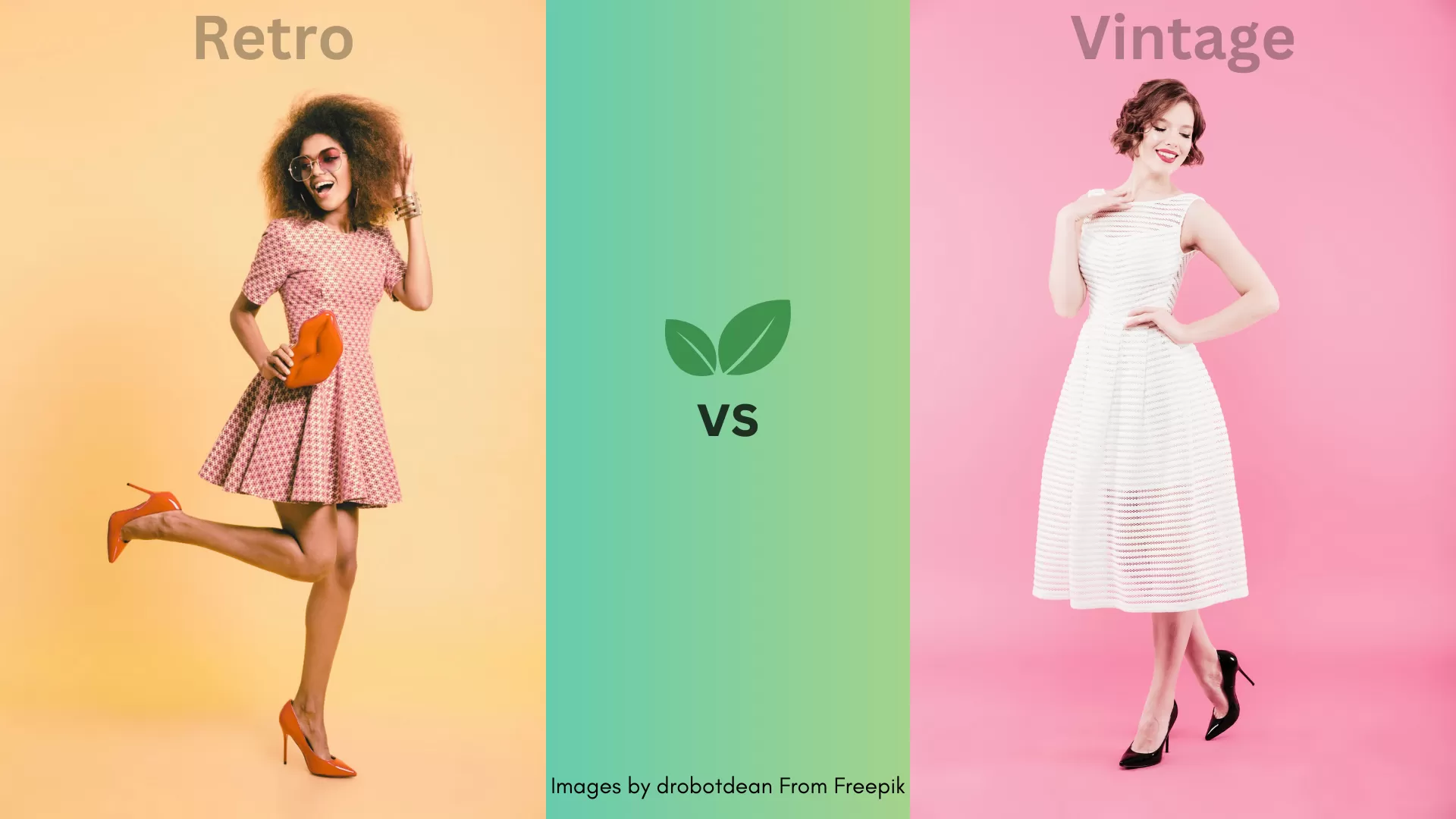
Retro styles vs vintage clothing: you’ve likely come across these terms, and like many, you probably think they’re the same, right? The lines between them can be blurry. But here’s the thing: they’re not the same, and understanding the difference is very important, especially when you’re aiming for a sustainable wardrobe.
In this article, we will clarify the world of retro and vintage, arming you with the knowledge to make informed, eco-conscious choices. So, let’s dive in and uncover the true meaning behind those charming throwback looks.
Jump To:
Toggle
What Exactly is Vintage Clothing?
Vintage clothing is history you can wear, not just old clothes.Typically, it refers to garments from past eras, usually 20 years or older. Therefore, these pieces carry stories, reflect the styles of their time, and often evoke a sense of nostalgia. In essence, they are time capsules in fabric form. For instance, a 1960s mod dress, a 1980s leather jacket, or a 1950s swing skirt – these are all prime examples of genuine vintage.
Why Vintage is Sustainable:
Aside from its aesthetic appeal, vintage clothing has substantial environmental benefits. To understand its eco-friendly nature, let’s explore the key ways vintage clothing promotes sustainability:
- Extends garment lifespan: By giving old clothes a new home, we reduce textile waste.
- Lowers carbon footprint: No new production means less energy and resources used.
- Unique and high quality: Vintage pieces often boast better craftsmanship and materials than today’s fast fashion.
Where To Find Reliable Vintage:
- Etsy: A great source for curated vintage finds from individual sellers.
- Depop: A social shopping app with a large selection of vintage and secondhand clothing.
- The RealReal: Focused on authenticated luxury consignment, that includes a vintage section.
What are Retro Styles?
While vintage celebrates the authentic past, retro styles offer a modern homage to it. Essentially, retro styles are newly manufactured garments designed to emulate the aesthetics of past eras.
They capture the look, the feel, but are produced using modern methods and materials. So, what exactly sets retro apart, and how does its sustainability compare?
Retro Style Sustainability: Ethical vs. Fast Fashion
The sustainability of retro styles varies significantly, ranging from eco-conscious practices to fast-fashion pitfalls. Let’s delve into the different approaches:
- Ethical retro: Brands prioritizing sustainable materials (organic cotton, recycled fabrics) and ethical production.
- Fast-fashion retro: Mass-produced, trend-driven pieces with a high environmental impact.
Sustainable Retro Brands:
For those seeking retro styles with a conscience, here are a few brands leading the way in sustainable practices:
- Reformation: Known for vintage-inspired designs made with sustainable practices.
- People Tree: Offers ethically made retro style garments.
- Beaumont Organic: produces sustainable retro inspired clothing.
What are the Key Differences Of Retro Styles and Vintage Clothing
To clearly understand the distinction between retro and vintage, let’s examine the key differences that set them apart:
- Origin: Vintage is pre-owned; retro is newly made.
- Sustainability: Vintage is inherently more sustainable; retro varies widely.
- Quality: Vintage often boasts superior craftsmanship; retro quality depends on the brand.
- Uniqueness: Vintage is one-of-a-kind; retro is mass-produced.
- Buying Vintage vs. Retro: Vintage requires careful inspection; retro offers consistent sizing.
- Ethical retro clothing is important to research before purchasing.
The Sustainability Factor of Retro vs Vintage
To really appreciate the environmental impact of our fashion choices, let’s look at the sustainability distinctions between retro and vintage:
- Vintage’s Green Advantage:
- Reduces textile waste: Extends the life of existing garments.
- Minimizes carbon footprint: Avoids the environmental impact of new production.
- Conserves resources: Reduces the need for raw materials and energy.
- Retro’s Environmental Impact:
- Fast fashion retro: Contributes to overconsumption and waste.
- Sustainable retro: Minimizes impact through eco-friendly materials and ethical practices.
- The importance of sustainable retro styles cannot be overstated.
- Beware of Greenwashing:
- Some brands may use “vintage-inspired” or “eco-friendly” labels without genuine sustainable practices.
- Consumers should research the company’s manufacturing policies.
How to Shop Retro and Vintage Sustainably
Consider these guidelines when researching retro and vintage styles:
- Tips for Identifying Genuine Vintage:
- Check for age, construction, and fabric quality.
- Look for unique details and signs of wear.
- Research the era and style.
- How to Shop for Sustainable Retro:
- Look for certifications (e.g., GOTS, Fair Trade).
- Choose brands with transparent supply chains.
- Prioritize natural or recycled materials.
- Questions to Ask Brands:
- What materials are used?
- Where are the garments made?
- What are the brand’s ethical and environmental policies?
Conclusion
In summary, understanding the differences between retro styles and vintage apparel is more than just fashion knowledge – it’s an important step toward responsible consumption. While both offer distinct styles, vintage clothing has a clear environmental edge. Sustainable retro styles might be a greener option, as long as they are produced responsibly.
However, it is important to distinguish between genuinely sustainable brands and those that engage in greenwashing. Finally, by making informed decisions, we can all work toward a more stylish and environmentally responsible future.
Quick Recap Of Retro Styles vs Vintage Clothing:
- Vintage: Pre-owned garments from past eras, inherently sustainable.
- Retro: New, sustainability varies.
- Prioritize vintage for eco-impact.
- Choose sustainable retro: Check brand transparency.
- Avoid greenwashing: Ask brands questions.
- Sustainable Vintage: Etsy, Depop, The RealReal.
- Sustainable Retro: Reformation, People Tree, Beaumont Organic.
- Shop Sustainably: Certifications, materials, transparency.
Which style resonates with you more: retro or vintage? Share this article and let us know your thoughts in the comments below!